You get a quiet break on a night shift, check your phone, then check it again. Suddenly it is time to go back. Reading or learning something sounds better, but choosing a course can take the whole break.
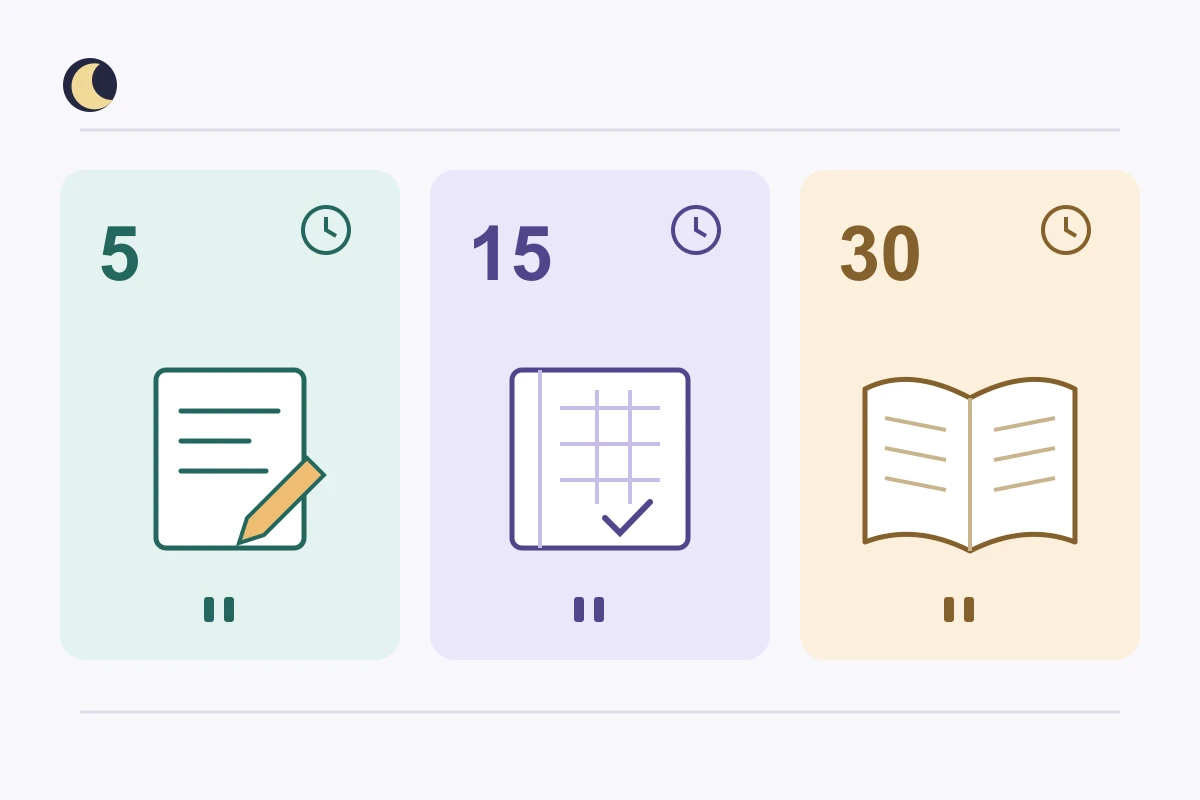
Try preparing one five-minute option, one fifteen-minute option, and permission to just rest. The times below are ways to use a break you already have, not recommendations for how long workplace breaks should be.
A quiet workplace is not the same as a break
No calls or alarms does not necessarily mean you are free. If your job involves watching monitors, driving, operating equipment or observing patients, leave personal activities for a proper break. Follow your workplace rules on phones and headphones.
If you might be called back even during a break, choose something you can put down immediately. A short article or a single practice question is easier to interrupt than a live class or a multiplayer game.
Five minutes: finish something small
Five minutes can disappear while you look for material. Pick one thing you already have:
- Review three phrases in a language you are learning. Cover the meanings, try to recall them, then write one short sentence. Setting up a new app can wait.
- Read a small, clearly bounded section. Two pages of a book or one section of a saved article is enough. Write one line you want to remember.
- Clear one small task for your next day off. List three groceries you need or a question to ask the local swimming pool. You do not have to complete the booking now.
- Do nothing productive. Put the screen away, sit quietly or chat with a colleague in an appropriate break area. There does not need to be a result to record.
If choosing is taking too long, use this rule: something already available, with an obvious stopping point.
Fifteen minutes: try one thing yourself
With a little more time and enough concentration, choose a small exercise. Instead of “learn spreadsheets”, try entering five made-up numbers and calculating their total. Use invented examples, never workplace records.
For language learning, read a short dialogue and write two sentences you could actually use. For an exam, attempt one practice question and look up one unfamiliar term in the explanation. If drawing appeals more, sketch a single everyday object.
You do not need to fill all fifteen minutes. Before stopping, leave a note such as “Next: example two”. That gives you a starting point when another break becomes available.
Thirty minutes: one section, with room to rest
During a protected break away from your duties, you might choose part of an online course or a short chapter. Check whether it has a useful stopping point, rather than judging it by the length of the whole course.
For example, use five minutes to settle down, fifteen to read or practise, and leave the final ten for resting, packing up and returning. This is an example, not a formula. Learning does not have to occupy the entire break.
For an English-language starting point, the Open University offers free courses through OpenLearn. Check the contents and difficulty before committing. A book you already own or one freely available article can work just as well.
A small plan for your next three night shifts
Suppose you want to learn a few phrases for a trip:
- First available break: choose three phrases and check what they mean.
- Next available break: recall them without looking, then write two sentences.
- A later break: revisit the phrase you found difficult and choose what comes next.
If work is busy and a session does not happen, continue at the next opportunity. There is no backlog to complete after work. A useful plan for shift work should be easy to resume when the schedule changes.
Bored and sleepy need different responses
If you keep losing your place or struggle to keep your eyes open, finding more entertaining content is not the answer. Stop the optional activity and follow your workplace’s rest and fatigue-reporting procedures. NIOSH notes that fatigue can affect attention and reactions.
A break spent resting can simply stay a break. This list is not another assignment.
Save these four lines before your next shift
Copy this into a note or onto a small piece of paper:
If I have five minutes: __________
If I have fifteen minutes: __________
If I cannot concentrate: rest
Where to start next time: __________
One book, one saved article or one sheet of notes is enough. If the activity turns out to be dull, choose something else next time. Your break does not need to become another thing to perform well at.
Sources & further reading
Reviewed: Oct 20, 2026